Renaissance Man
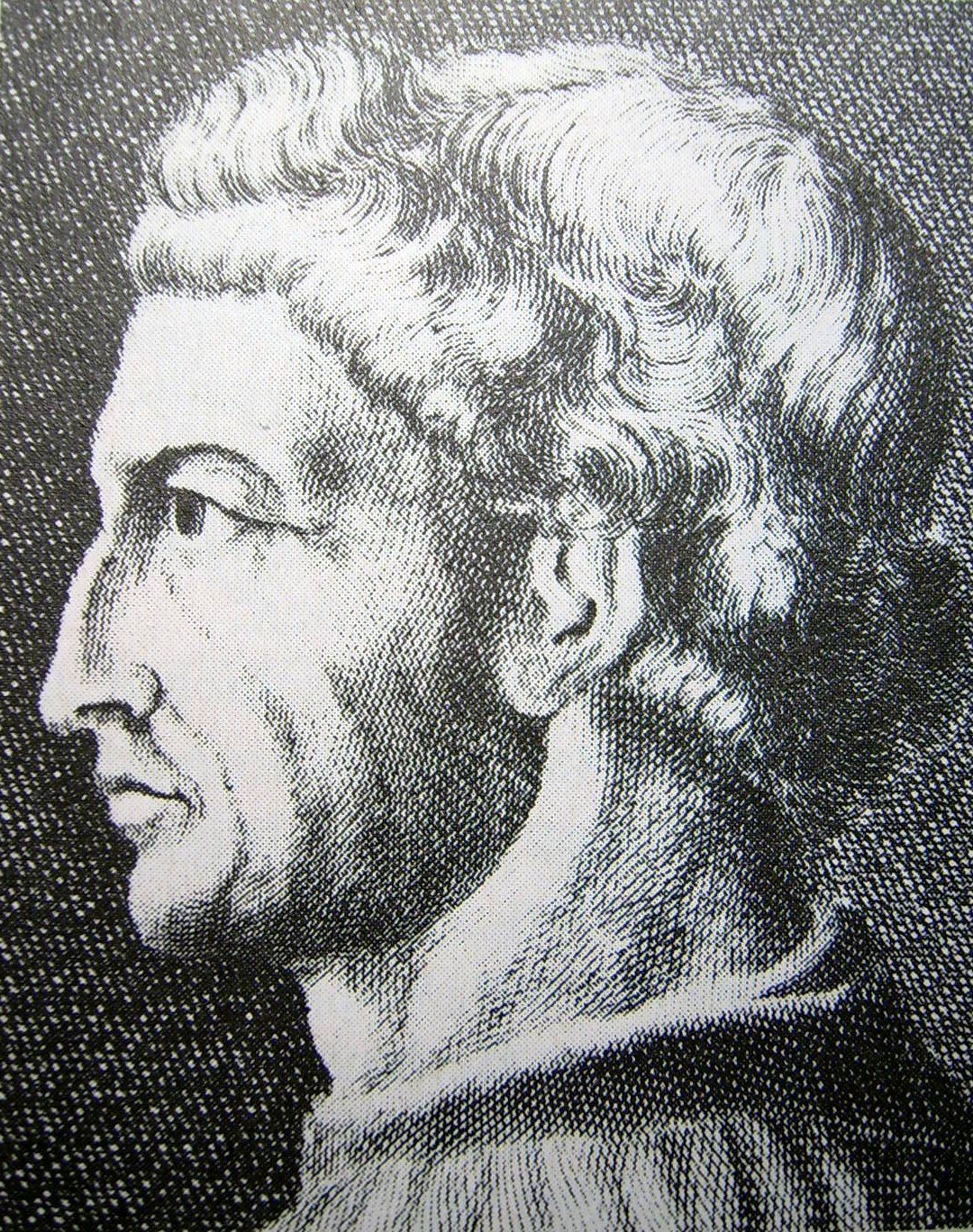 Leon Battista Alberti (1404–72). Architect, poet, musician, philosopher, linguist, cryptographer (founding father of western cryptography), painter and sculptor.
Renaissance man is an ideal that is epitomised by the notion of "a man can do all things if he will", which is expresses and championed by Leon Battista Alberti. The ideal embodied the basic tenets of Renaissance humanism, which considered man the centre of the universe, limitless in his capacities for development, and led to the notion that men should try to embrace all knowledge and develop their own capacities as fully as possible.
Thus the gifted men of the Renaissance sought to develop skills in all areas of knowledge, in physical development, in social accomplishments, and in the arts. The ideal was most brilliantly exemplified in Alberti himself, and in Leonardo Da Vinci.
Most tends to be a Gentleman Scientist
Renaissance Men To Follow and Peruse[^1]
living
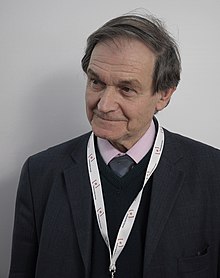
- Roger Penrose
-  - math
ematical physics
- philosopher of science
- Terrence Tao
- terrytao.wordpress.com (his blog)
- peruse this
- it is incredible soource! has many links to great mathematicians
- terrytao.wordpress.com/career-advice
- Celal Sengor
- geology, paleontology, history of science
- Gustav-Steinmann Medal
- man of the 19th century
- homme de lettre
- brilliant historian of science
- prodigious memory, wide cultural approach
- "Celâl created such a paradise in Istanbul, a marvellous library covering the entire history of geology from Archbishop Ussher and Steno to Suess, Wegener and Argand, his heroes."
- Humorous part: "... as in all his undertakings, he is not a friend of understatement."
- Arthur Holmes Medal
- "world leader in tectonics and palaeogeography"
- Expert on European geology and the history of geology.
- Speaks, reads and writes in six different languages.
- "His reading of original geologic works in these languages gives him access to geologic works not accessible to other Earth scientists, enabling his broad knowledge and sweeping interpretation of geologic systems worldwide"
- Elon Musk
- SpaceX
- Tesla
- Neuralink
- OpenAI
- X
- Balaji
- Entrepreneur
- Angel investor
- Essayist
- Paul Graham
- Entrepreneur
- GOAT VC investor
- Essayists
- Peter Thiel
- DHH
- great software designer - Ruby on Rails
- entrepreneur - Signal37, BaseCamp
- racing driver - Le Mans Class-Winning
- essayist - https://world.hey.com/dhh
- orator
dead
- John von Neumann
-
- math
- mathematical physics
- philosopher of science
- Terrence Tao
- terrytao.wordpress.com (his blog)
- peruse this
- it is incredible soource! has many links to great mathematicians
- terrytao.wordpress.com/career-advice
- Celal Sengor
- geology, paleontology, history of science
- Gustav-Steinmann Medal
- man of the 19th century
- homme de lettre
- brilliant historian of science
- prodigious memory, wide cultural approach
- "Celâl created such a paradise in Istanbul, a marvellous library covering the entire history of geology from Archbishop Ussher and Steno to Suess, Wegener and Argand, his heroes."
- Humorous part: "... as in all his undertakings, he is not a friend of understatement."
- Arthur Holmes Medal
- "world leader in tectonics and palaeogeography"
- Expert on European geology and the history of geology.
- Speaks, reads and writes in six different languages.
- "His reading of original geologic works in these languages gives him access to geologic works not accessible to other Earth scientists, enabling his broad knowledge and sweeping interpretation of geologic systems worldwide"
- Elon Musk
- SpaceX
- Tesla
- Neuralink
- OpenAI
- X
- Balaji
- Entrepreneur
- Angel investor
- Essayist
- Paul Graham
- Entrepreneur
- GOAT VC investor
- Essayists
- Peter Thiel
- DHH
- great software designer - Ruby on Rails
- entrepreneur - Signal37, BaseCamp
- racing driver - Le Mans Class-Winning
- essayist - https://world.hey.com/dhh
- orator
dead
- John von Neumann
- 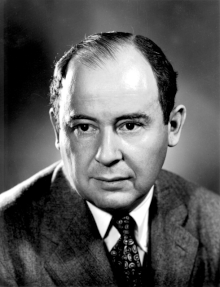 - math
- set theory, Von Neuman paradox, proof theory, ergodic theory, measure theory, topological groups, functional analysis, operator algebras, lattice theory, mathmatical statistics
- physics
- Quantum mechanics (Dirac–von Neumann axioms, Von Neumann entropy, densitiy matrix, Von Neuman measurement scheme, Quantum logic), Fluid dynamics
- economics
- Founding father of game theory, Von Neumann–Morgenstern utility theorem, linear programming
- computer science
- hardware (Von Neumann architecture, designed IAS machine)
- algorithms (invented merge sort, contributed to Monte Carlo method, introduced stochastic computing (1953) was among the first to talk about time complexity of computations)
- cellular automata (created the field with Stanisław Ulam in 1940s as simplified model of biological systems, , Von Neumann neighborhood, Von Neumann cellular automaton)
- scientific computing and numerical analysis (developed Von Neumann stability analysis)
- philosophy of tech
- coined the term singularity
- engineering
- Manhattan Project (concept and design of the explosive lenses that were needed to compress the plutonium core of the Fat Man weapon)
- Bertrand Russell
- math
- philosophy
- logic
- essayist
- Benjamin Franklin
- inventor (lightning rod, bifocals, etc.)
- scientist
- philosopher
- diplomat
- Newton
- math (developed calculus and universal gravitation)
- physics
- philosophy
- Leibniz
- math (developed differential and integral calculus independently from Newton)
- physics
- philosophy
- diplomat
- Leonardo da Vinci
- painter
- sculptor
- architect
- anatomist
fictional polymaths from Jules Verne stories
- Otto Lindenbrock: mineralogist, geologist, linguist
- math
- set theory, Von Neuman paradox, proof theory, ergodic theory, measure theory, topological groups, functional analysis, operator algebras, lattice theory, mathmatical statistics
- physics
- Quantum mechanics (Dirac–von Neumann axioms, Von Neumann entropy, densitiy matrix, Von Neuman measurement scheme, Quantum logic), Fluid dynamics
- economics
- Founding father of game theory, Von Neumann–Morgenstern utility theorem, linear programming
- computer science
- hardware (Von Neumann architecture, designed IAS machine)
- algorithms (invented merge sort, contributed to Monte Carlo method, introduced stochastic computing (1953) was among the first to talk about time complexity of computations)
- cellular automata (created the field with Stanisław Ulam in 1940s as simplified model of biological systems, , Von Neumann neighborhood, Von Neumann cellular automaton)
- scientific computing and numerical analysis (developed Von Neumann stability analysis)
- philosophy of tech
- coined the term singularity
- engineering
- Manhattan Project (concept and design of the explosive lenses that were needed to compress the plutonium core of the Fat Man weapon)
- Bertrand Russell
- math
- philosophy
- logic
- essayist
- Benjamin Franklin
- inventor (lightning rod, bifocals, etc.)
- scientist
- philosopher
- diplomat
- Newton
- math (developed calculus and universal gravitation)
- physics
- philosophy
- Leibniz
- math (developed differential and integral calculus independently from Newton)
- physics
- philosophy
- diplomat
- Leonardo da Vinci
- painter
- sculptor
- architect
- anatomist
fictional polymaths from Jules Verne stories
- Otto Lindenbrock: mineralogist, geologist, linguist
Renaissance Circles
Breakthroughs often come in bursts or explosions from a small number of people knowing each other and in commincation.
Below is my attempt to list such circles in history:
Pythagoreans (6th century BCE) - Pythagoras, Philolaus, Archytas - Mathematics, music theory, astronomy
Abbasid Period Polymaths in Baghdad (8th-9th century):
- Al-Khwarizmi (780-850)
- Father of algebra (term "algebra" comes from his book "Kitab al-Jabr")
- 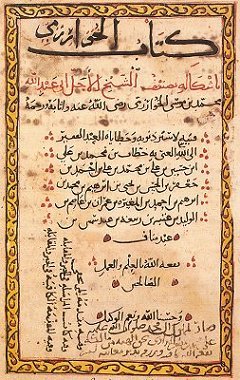 - Introduced Indian numerals to the West (later known as Arabic numerals)
- Developed systematic solution of linear and quadratic equations
- Pioneered trigonometry tables
- Algorithm
- etymologically a mangled transliteration from "Al-Khwarizmi"
- Al-Kindi (801-873)
- "Philosopher of the Arabs"
- Cryptography pioneer (frequency analysis for code breaking)
- Works in optics, medicine, mathematics, and music theory
- Over 260 works spanning multiple disciplines
- Centers: Baghdad (House of Wisdom), Khorasan, Bukhara, Samarkand
- Introduced Indian numerals to the West (later known as Arabic numerals)
- Developed systematic solution of linear and quadratic equations
- Pioneered trigonometry tables
- Algorithm
- etymologically a mangled transliteration from "Al-Khwarizmi"
- Al-Kindi (801-873)
- "Philosopher of the Arabs"
- Cryptography pioneer (frequency analysis for code breaking)
- Works in optics, medicine, mathematics, and music theory
- Over 260 works spanning multiple disciplines
- Centers: Baghdad (House of Wisdom), Khorasan, Bukhara, Samarkand
Iran-Central Asia Golden Age (10th-13th century):
- Omar Khayyam (1048-1131)
- Mathematician, astronomer, poet
- Solved cubic equations geometrically using conic sections
- Created the Jalali calendar (more accurate than Gregorian)
- Famous for "Rubaiyat" poetry translated by Edward FitzGerald
- Contributed to algebra, geometry and astronomy
- Avicenna (Ibn Sina) (980-1037)
- "The Father of Modern Medicine"
- Wrote "The Canon of Medicine" (medical textbook used until 1700s)
- First to describe meningitis
- Pioneered clinical trials and evidence-based medicine
- Described diabetes, cancer treatments
- "Book of Healing" - comprehensive scientific & philosophical encyclopedia
- Over 450 works on philosophy, medicine, astronomy
- Developed the "floating man" thought experiment for consciousness
- vaguely similar to cogito ergo sum of Descartes
- Al-Biruni (973-1048)
- Calculated Earth's circumference with remarkable accuracy
- Pioneered experimental method six centuries before Galileo
- Major works:
- Chronology of Ancient Nations
- "Indica" (comprehensive study of Indian culture)
- "Elements of Astrology"
- Wrote on India, comparative religion, geology, mathematics
- First to suggest Earth rotates around its axis
- Al-Ghazali (1058-1111)
- Major philosopher and theologian
- The Incoherence of the Philosophers
- Influenced both Islamic and Christian thought
- Key works on logic, theology and mysticism
- Bridged orthodox Islam with Sufi traditions
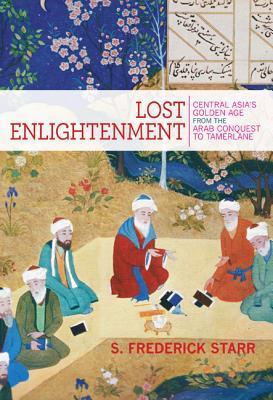
- Key Institutions & Centers (...)
- Bukhara
- Major center of learning under Samanids
- Home to extensive libraries
- Samarkand Observatory
- Major astronomical research center
- Advanced mathematical astronomy
- Merv Libraries
- Ten major libraries
- Over 150,000 volumes
- Major copying center
- Other Centers: Isfahan, Nishapur
- Notable madrasas and libraries
- Attracted scholars from across Eurasia
- Cultural Context:
- Flourished under Samanid and Seljuk patronage
- Persian language revival in sciences
- Translation movement from Greek, Sanskrit
- 
Timurid Renaissance (14th-15th century):
- Ulugh Beg (1394-1449)
- Astronomer-king who built massive observatory in Samarkand
- Created most accurate star catalog of its time
- Calculated length of year to within 58 seconds of modern value
- Built major mathematical school
- Al-Kashi (d. 1429)
- Computed π to 16 decimal places
- Invented decimal fractions
- Key innovations in spherical trigonometry
- Director of Ulugh Beg's observatory
- Centers: Samarkand (especially its observatory), Herat
- Key Institutions:
- House of Wisdom (Baghdad)
- Major translation center
- Library and research institute
- Gathered scholars from across the known world
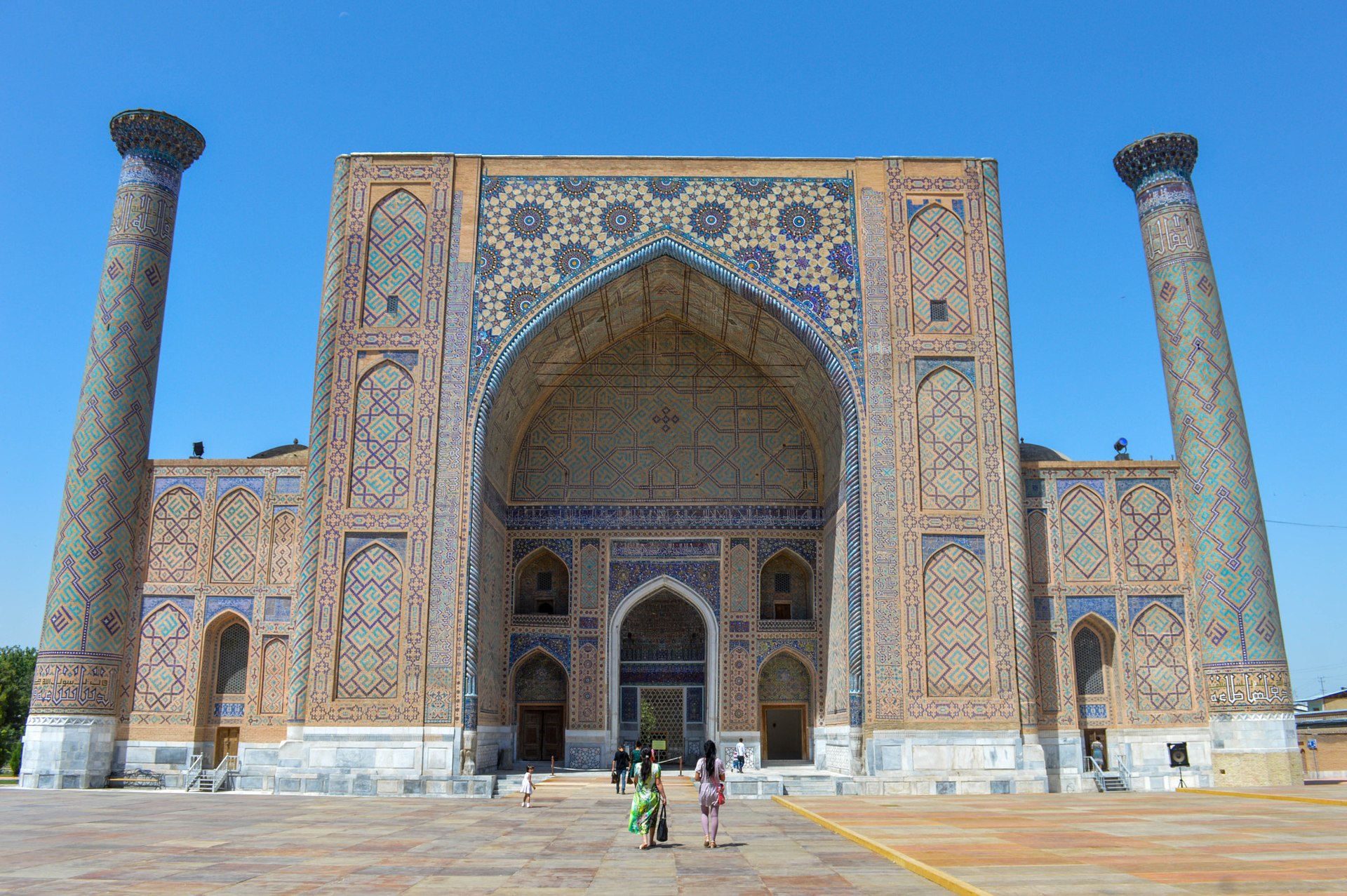
- Samarkand Observatory
- Largest observatory of its time
- Three-story astronomical instrument
-  - Libraries of Merv
- Ten major libraries
- Over 150,000 volumes
- Major copying center
- Libraries of Merv
- Ten major libraries
- Over 150,000 volumes
- Major copying center
Renaissance Painters (15th-16th century) - Florentine School - Leonardo, Michelangelo, Botticelli - Centered around Medici patronage - Also: Fra Angelico, Filippo Lippi, Ghirlandaio - Known for: linear perspective, anatomical accuracy, fresco technique - Venetian School - Titian, Giorgione, Veronese - Innovations in color and light - Also: Bellini family (Jacopo, Giovanni, Gentile), Tintoretto - Known for: oil painting techniques, rich colors, atmospheric effects - Roman School - Raphael, Giulio Romano - Influenced by ancient Roman art - Known for: harmony, ideal beauty, classical composition - Northern Renaissance - Dürer, van Eyck brothers, Bosch, Bruegel - Innovations in oil painting and woodcuts - Known for: extreme detail, symbolism, realistic landscapes - Notable Workshops - Verrocchio's Workshop (Florence) - Trained: Leonardo da Vinci, Botticelli, Perugino - Combined painting, sculpture, metalwork - Ghirlandaio's Workshop (Florence) - Trained: Michelangelo - Specialized in fresco cycles
École Polytechnique (late 1700s) - Lagrange (Analytical mechanics), Laplace (Celestial mechanics), Fourier (Heat theory and analysis) - Notable figures: - Joseph-Louis Lagrange (1736-1813) - Developed analytical mechanics (Lagrangian mechanics) - Contributions to number theory and calculus of variations - Created the theory of analytical functions - Pierre-Simon Laplace (1749-1827) - "French Newton" - Celestial mechanics and mathematical astronomy - Developed Laplace transform and Laplace equation - Pioneer of probability theory and statistics - Joseph Fourier (1768-1830) - Discovered Fourier series and transform - Studied heat conduction and thermodynamics - First to describe greenhouse effect - Augustin-Louis Cauchy (1789-1857) - Rigorous foundations of calculus - Complex function theory - Over 800 published papers - Historical context: - Founded during French Revolution (1794) - Originally military engineering school - Became center of excellence in mathematics and physics - Motto: "Pour la Patrie, les Sciences et la Gloire" (For the Nation, Science and Glory) - Legacy: - Established modern mathematical physics - Pioneered applied mathematics - Influenced scientific education worldwide - Many fundamental theorems and concepts named after its professors
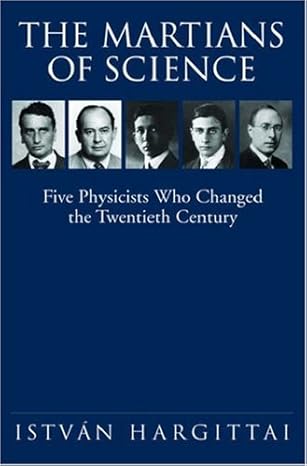
The Martians
- Hungarian scientific diaspora
- von Neumann, Erdős, Pólya, Teller, Wigner, von Kármán, Szilard, ...
- Revolutionized multiple fields in Mathematics, Physics, Computer Science, and Aeronautics
- 
Copenhagen School (1920s-1930s) - Quantum physics pioneers - Niels Bohr, Werner Heisenberg, Wolfgang Pauli - Extended Circle: Max Born, Paul Dirac, Erwin Schrödinger - Developed Copenhagen interpretation of quantum mechanics
Bell Labs (1925-1980s)
- Transistor (Shockley, Bardeen, Brattain - 1956 Pyhsics Nobel)
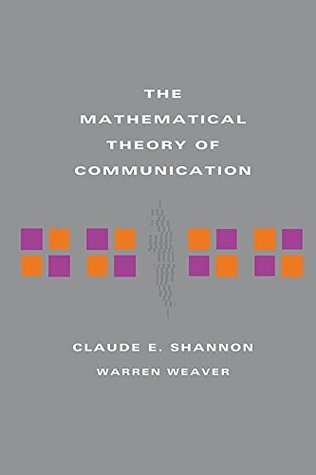
- Information Theory (Claude Shannon, IEEE)
- Unix (Ken Thompson, Dennis Ritchie)
- C (Dennis Ritchie)
- C++ (Bjarne Stroustrup)
- UNIX Shell and B (Ken Thompson)
- AWK (Aho, Weinberger, Kernighan)
- Cosmic radio waves, founding father of radio astronomy (Karl Jansky)
- Laser (Charles Townes, Arthur Schawlow)
- Charge-coupled device (CCD - Willard Boyle, George E. Smith)
- Solar Cells (Russell Ohl, Gerald Pearson)
- Cosmic Microwave Background Radiation (Arno Penzias, Robert Wilson)
- Communication Satellites (John Pierce)
- Cellular Technology (Richard Frenkiel, Joel Engel)
- details (notable scientists and achievements)
- Notable Scientists:
- Claude Shannon (Information Theory)
- William Shockley (transistor, 1956 Nobel in Physics)
- John Bardeen (only person to win Physics Nobel twice: for transistors (1956) and superconductivity (1957))
- Ken Thompson & Dennis Ritchie (Unix, C)
- Brian Kernighan (Unix, AWK, "K" in K&R C)
- Richard Hamming (Hamming codes (error-correcting), Hamming window, Hamming distance)
- Steven Chu (laser cooling - 1997 Nobel in Physics)
- Philip Anderson (electron localization, condensed matter - 1977 Nobel in Physics)
- Walter Brattain (co-inventor of transistor, 1956 Nobel in Physics)
- Achievements:
- 11 Nobel Prizes
- 5 Turing Awards
- 4 IEEE Medals of Honor
- 14 National Medals of Science
- You and Your Research by Hamming gives plenty of anectodes from Bell Labs.
- a very influencial essay.
- 
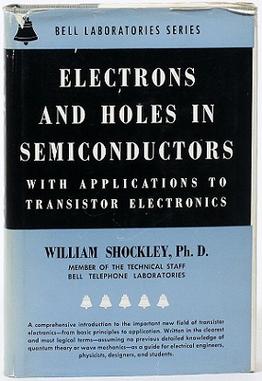
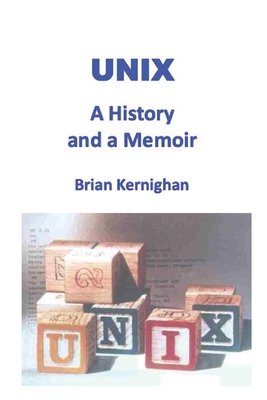
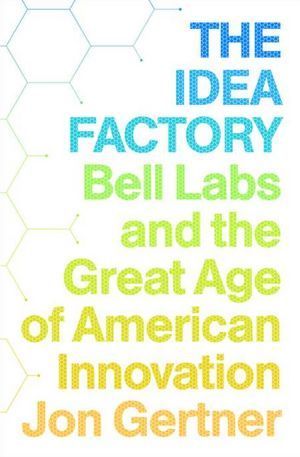
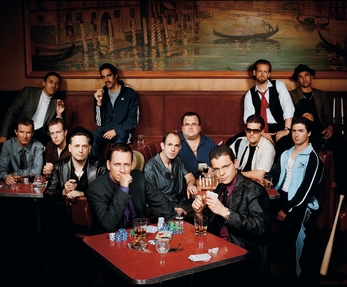
PayPal Mafia
- Peter Thiel, Elon Musk, Reid Hoffman, Max Levchin, David Sacks, ...
- Tesla, SpaceX, LinkedIn, Palantir, YouTube, Yelp, ..
- 
Russian Novelists (19th-20th century) - Tolstoy, Dostoevsky, Pushkin, Chekhov, Turgenev, Gogol, ...
Manhattan Project (1940s) - Oppenheimer, Lawrence, Fermi, von Neumann, Bethe, Groves, Teller - Legacy extends beyond atomic weapons to computing and materials science
Vienna Circle (1920s-1930s) - Philosophy of Science, and Logic - Moritz Schlick, Rudolf Carnap, Kurt Gödel - Associated: Karl Popper, Ludwig Wittgenstein - Islamic Golden Age
- https://de.wikipedia.org/wiki/Leon_Battista_Alberti
- founding father of western cryptography
- Renaissance man
- Roger Penrose
- https://en.wikipedia.org/wiki/Roger_Penrose
- terrytao.wordpress.com
- terrytao.wordpress.com/career-advice
- Gustav-Steinmann Medal
- Arthur Holmes Medal
- racing driver
- https://world.hey.com/dhh
- John von Neumann
- https://en.wikipedia.org/wiki/John_von_Neumann
- set theory
- Von Neuman paradox
- Dirac–von Neumann axioms
- Von Neumann entropy
- Von Neuman measurement scheme
- Quantum logic
- game theory
- Von Neumann–Morgenstern utility theorem
- Von Neumann architecture
- IAS machine
- merge sort
- Monte Carlo method
- stochastic computing
- Stanisław Ulam
- https://en.wikipedia.org/wiki/Von_Neumann_universal_constructor
- Von Neumann neighborhood
- Von Neumann cellular automaton
- Von Neumann stability analysis
- singularity
- Manhattan Project
- Newton
- Leibniz
- Otto Lindenbrock
- https://archive.org/details/aljabar_alkhwarizmi/page/n15/mode/2up
- etymologically
- Omar Khayyam (1048-1131)
- "floating man"
- Chronology of Ancient Nations
- The Incoherence of the Philosophers
- https://www.goodreads.com/book/show/17847856-lost-enlightenment
- https://en.wikipedia.org/wiki/Ulugh_Beg_Observatory
- The Martians
- https://www.amazon.com/Martians-Science-Physicists-Changed-Twentieth/dp/B0019RWVRS
- Bell Labs (1925-1980s)
- Shockley
- Bardeen
- Brattain
- Claude Shannon
- IEEE
- Ken Thompson
- Dennis Ritchie
- Bjarne Stroustrup
- Aho
- Weinberger
- Karl Jansky
- Charles Townes
- Arthur Schawlow
- Willard Boyle
- George E. Smith
- Russell Ohl
- Gerald Pearson
- Arno Penzias
- Robert Wilson
- John Pierce
- Richard Frenkiel
- Joel Engel
- transistors
- superconductivity
- Hamming codes
- Hamming window
- Hamming distance
- You and Your Research by Hamming
- https://www.goodreads.com/book/show/880735.The_Mathematical_Theory_of_Communication
- https://ia903209.us.archive.org/24/items/ElectronsAndHolesInSemiconductors/electrons_and_holes_in_semiconductors.pdf
- https://www.goodreads.com/book/show/53011383-unix
- https://www.goodreads.com/book/show/11797471-the-idea-factory
- PayPal Mafia