How I Learn Math
Venn diagrams to choose good math books/articles
Venn diagram of great mathematicians Venn diagram of great math explainers Read books from those who are at the intersection of above two venn diagrams
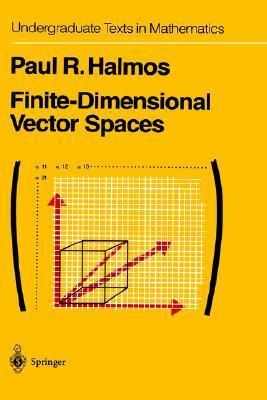
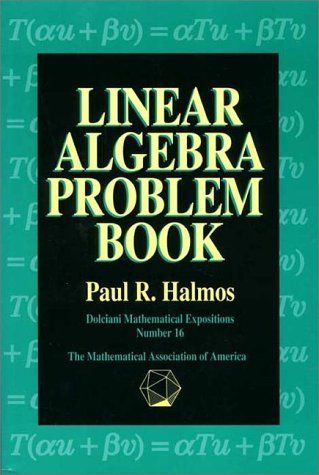
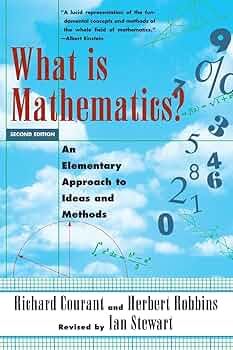
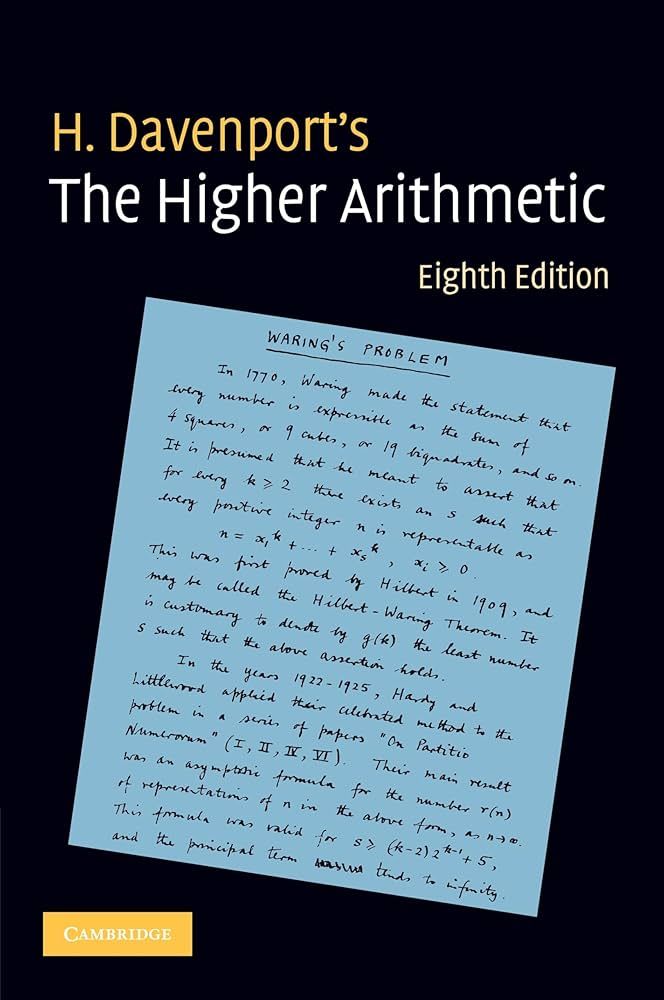
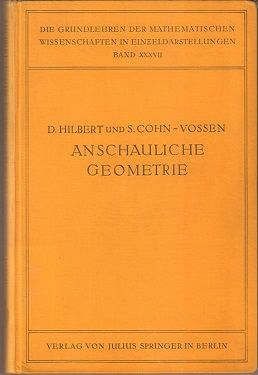 Halmos, Courant, Davenport, Hilbert,
Those books that I know of are Courant's What is Mathematics? (praised by Einstein), David Hilbert's Geometry and Imagination, and W. W. Sawyer's Math Books which are highly praised by Paul Graham. Additionally, Davenport's Higher Arithmetics and The Princeton Companion to Mathematics (it is more like an encyclopedia from many different authors. Each author is a great mathematicians, and some of them are also great explainers, while some others not)
Universal truth with books. Most books are bad. Nearly all textbooks are bad finding good books and learning material is extremely important
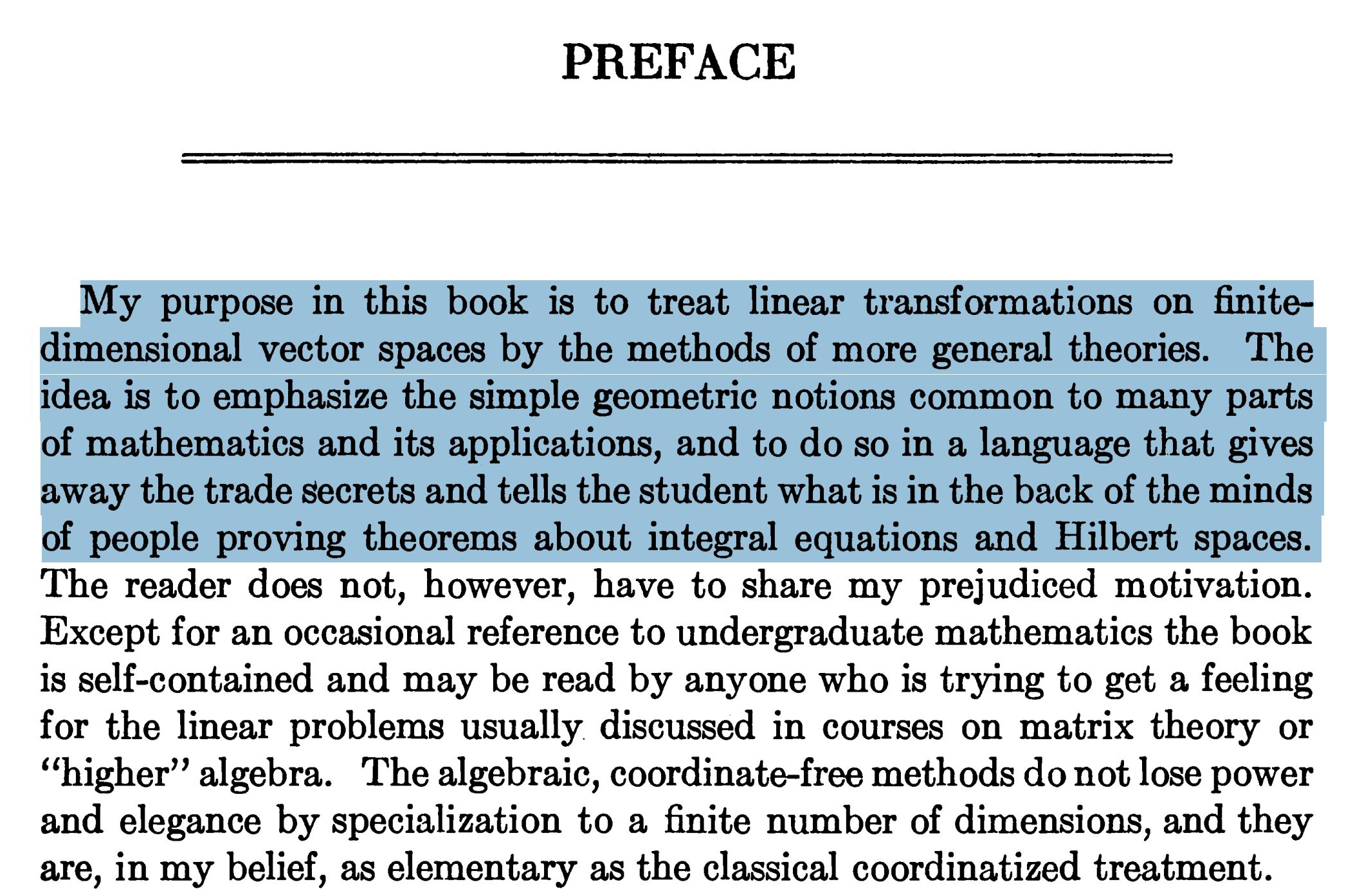
Below explanation of Paul R. Halmos in his linear algebra book summarizes what I expect from a good math book.
-  - The complimentary book - Linear Algebra Problem Book (book) by Halmos
Halmos clearly had fun writing his books, that is apparent when reading them. Note that Halmos himself is a martian.
Dolciani Mathematical Expositions is a good place to find other such books.
Halmos method
Paul R. Halmos in his Hilbert Space problem book (preface, page vii) - ![[assets/media/822924676f9365e41f334b8063d2ffcd_MD5.jpeg|]]
Historical context
What did the mathematician know at the time he discovered this or proved something? What was his reasoning process? Which previous or contemporary mathematicians he talked to. What is the landscape of the problem and what are consequences. After knowing the surrounding context of a discovery, it becomes much more clear how he was able to found it. It's not magic. Genius is lamer than what would those who didn't know the context think.
Great math explainers explain within the context. Context of history, what the mathematician knew about others, process of reasoning, etc.
More generally, a canon of knowledge become consistent and meaningful only when thought within its historical development. Because all knowledge carries inconsistencies caused by its non-linear historical development. For example, polynomial means many-named/termed in latin. But, an equation involving factorials are not considered polynomial. This is not elegant. But it is what it is because of the historical development of the term. Another thing, which is not merely incorrect, but non-elegant is the fact that the term quadratic represents x^2. The word quadratic comes from quadratus in latin, meaning 'made square', hence involve 'quad' that means number four in latin. It is kind of confusing because it involves 'quad (four)' as it makes me think of x^4. Not elegant.
Problems with current mathematical education
See rant of Terence Tao on at his Lex Fridman interview. - current math education is very bad. we have one-size fits all approach to teaching now. - it is designed for classrooms of 30-40, but each actually needs an individual tutor - math can be much more accessible - evolution didn't give us a math center to do math directly. instead of we have other centers, like vision, language and others. how to do math is repurposing any of the other centers to do math. A mathematician can be very quick with one center and slow on others. Terence Tao himself admits to be bad with visual thinking
Tree/graph of proofs
Math dependency graph
e.g.
[THEOREM] Euler’s Totient Theorem
└── If a ∈ ℤ, gcd(a, n) = 1 ⇒ a^φ(n) ≡ 1 mod n
    |
    ├── [DEFINITION] Euler’s Totient Function φ(n)
    │   └── φ(n) = count of integers 1 ≤ k < n such that gcd(k, n) = 1
    │       ├── [DEFINITION] Coprimality: gcd(a, b) = 1
    │       │   └── [ALGORITHM] Euclidean Algorithm (to compute gcd)
    │       │       └── [AXIOM] Division Algorithm
    │       └── [ALGORITHM] Compute φ(n) using prime factorization
    │           └── φ(n) = n × ∏(1 - 1/p), for p | n
    │               └── [DEFINITION] Prime Factorization
    │                   └── [THEOREM] Fundamental Theorem of Arithmetic
    │                       └── Every integer > 1 is uniquely a product of primes
    │
    ├── [LEMMA] Multiplicative Property of φ(n)
    │   └── If gcd(m, n) = 1 ⇒ φ(mn) = φ(m)·φ(n)
    │       └── [PROOF] Uses Chinese Remainder Theorem
    │           └── [THEOREM] Chinese Remainder Theorem (CRT)
    │               └── [CONSTRUCTION] Isomorphism of ℤ/mnℤ ≅ ℤ/mℤ × ℤ/nℤ
    │
    ├── [LEMMA] Units Modulo n form a Group under Multiplication
    │   └── [CONSTRUCTION] (ℤ/nℤ)* = {a < n | gcd(a, n) = 1}
    │       ├── [DEFINITION] Group (Algebraic structure)
    │       └── [AXIOM] Associativity, identity, inverse, closure
    │
    ├── [THEOREM] Lagrange’s Theorem (Group Theory)
    │   └── In finite group G, order of any element divides |G|
    │       └── [PROOF] Coset partitioning argument
    │
    ├── [THEOREM] Fermat’s Little Theorem (special case of Euler’s)
    │   └── If p prime, a not divisible by p ⇒ a^(p−1) ≡ 1 mod p
    │       ├── [DEFINITION] Prime Number
    │       ├── [PROOF] Uses multiplicative group modulo p
    │       │   └── [LEMMA] (ℤ/pℤ)* is cyclic for prime p
    │       └── [COROLLARY] Euler’s Theorem generalizes Fermat’s
    │
    ├── [DEFINITION] Modular Arithmetic
    │   ├── [DEFINITION] Congruence: a ≡ b mod n ⇔ n | (a − b)
    │   ├── [DEFINITION] Modular Exponentiation: a^k mod n
    │   ├── [THEOREM] Properties of Congruences
    │   │   └── e.g., a ≡ b ⇒ a+c ≡ b+c and ac ≡ bc
    │   └── [ALGORITHM] Fast Modular Exponentiation
    │
    └── [EXAMPLE] Euler’s Theorem with n = 9, a = 2
        ├── φ(9) = 6 ⇒ 2^6 ≡ 1 mod 9
        └── (2^6 = 64; 64 mod 9 = 1 ✔️)
See how I generate dependency graphs at https://chatgpt.com/share/688c4b20-9050-8010-8070-52c2f85b0fac
Looking at this graph, one can divide the problem into sub-pieces. If you can prove/understand each node, then you can construct the whole proof leading to the theorem at hand. An ambitious project would be to generate an enormous map for the whole math where each node has its own document of proof. - Relevantly, Timothy Gowers works on an automatic theorem proving project.
Take multiple perspectives
Learn to Think in Multiple Ways — The Anthology of Balaji (archived) - verbal, visual, algebraic, numerical, computational, historical
Sorted by importance (by Baris) 1. historical, context, story [HOW? WHY?] 2. computational (in python code), constructive [HOW?] 3. algebraic [WHAT?] 4. numerical / visual (depending on the topic) [WHAT?] 5. verbal [WHAT? WHY?]
Relevant: humans learn through stories because they consist how and why
Visual perspective is especially helpful especially when remembering, for an overview. - e.g. - ![[Group, Abelian Group, Ring, Commutative Field, Vector Space, Ideal Visualizations#^307cdb]] - ![[Group, Abelian Group, Ring, Commutative Field, Vector Space, Ideal Visualizations#^4a65f2]]]
Another very helpful is code representation, as in Python. - e.g. RSA algorithm
Nuggets from the best math books
![[How To Solve It (book) by Polya#One-page summary from the book]]
- How to Read — - Books are anthologies of ideas. Move “blogpage to blogpage”: tackle self-contained sections, harvest their core cla...
- A Hilbert Space Problem Book (book) by Halmos
- Announcing an automatic theorem proving project (archived)
- Dolciani Mathematical Expositions
- Finite Dimensional Vector Spaces (book) by Halmos
- Geometry and the Imagination (book) (1921) by Hilbert and Cohn-Vossen
- Learn to Think in Multiple Ways — The Anthology of Balaji (archived)
- Linear Algebra Problem Book (book) by Halmos
- Paul R. Halmos
- RSA algorithm
- Terence Tao Hardest Problems in Mathematics, Physics & the Future of AI Lex Fridman Podcast 472 (archived)
- The Higher Arithmetic (Book) by Davenport
- The Martians (Hungarian Mathematicians)
- The Princeton Companion to Mathematics by Gowers Editor
- Universal truth with books. Most books are bad. Nearly all textbooks are bad
- W. W. Sawyer's Math Books
- What is Mathematics (book) (1941) by Courant and Robbins
- finding good books and learning material is extremely important
- humans learn through stories because they consist how and why
- pick books by how much the writer had fun